How to Solder Electronics

A Friendly Beginner’s Guide

Soldering is one of those skills that looks intimidating at first—but once you try it, it quickly becomes satisfying and even a little addictive. 😊 Whether you’re repairing a cable, building your first DIY project, or assembling our Lighttoys chips, learning how to solder opens the door to endless creative possibilities.

This guide is written especially for beginners. We’ll explain what soldering is, what tools you need, and how to get started step by step. We’ll also include video tutorials so you can see the technique in action.

What Is Soldering?

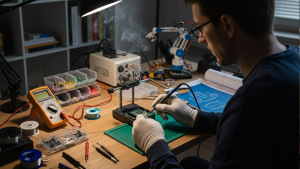
Soldering is the process of joining electronic components together using a melted metal alloy called solder. When heated, solder flows around the metal parts (such as component legs and copper pads) and, once cooled, creates a strong electrical and mechanical connection.

Good soldering is:

  • Reliable – electricity flows without interruptions
  • Strong – components don’t fall off
  • Clean – no accidental short circuits

Don’t worry—perfect joints come with practice, not talent.

Tools You Need for Soldering

You don’t need a professional workshop to start. A few basic tools are enough.

Screenshot

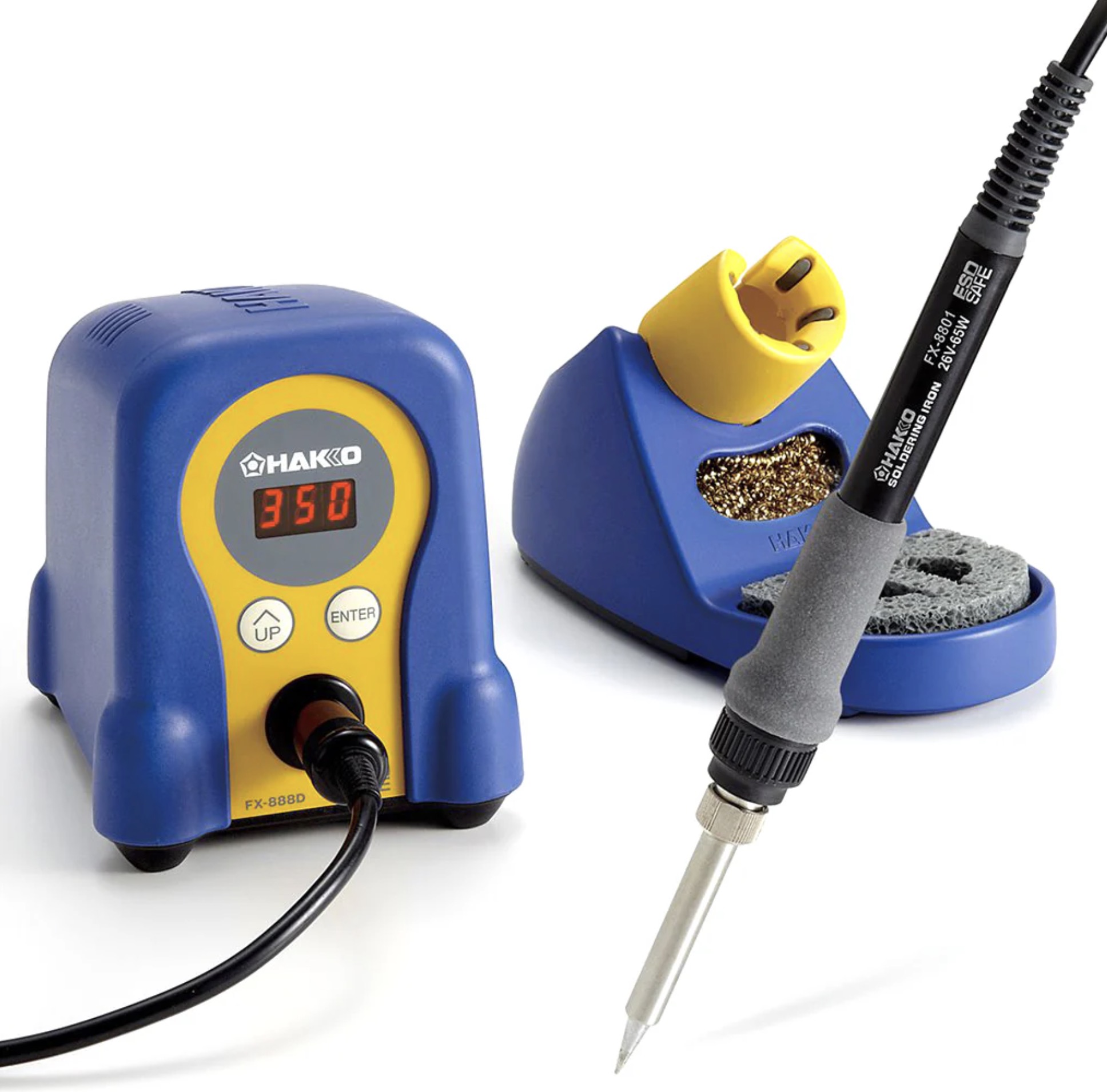
🔧 Soldering Iron

A soldering iron heats up the joint so the solder can melt and flow. For electronics:

  • Power around 30–60 W is ideal
  • A temperature‑controlled iron is highly recommended
  • Use a fine or medium tip for small electronic parts

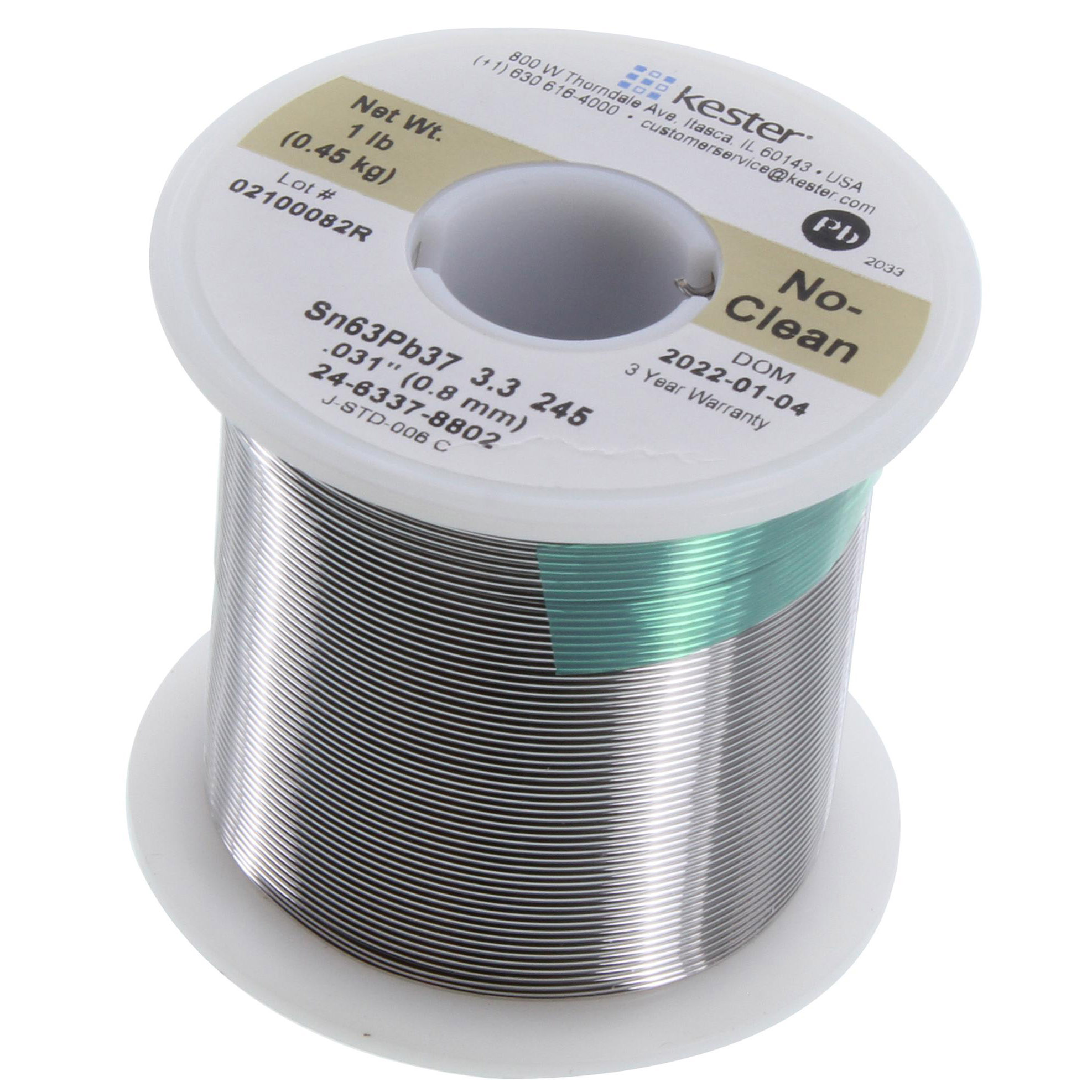
🔩 Solder

Solder is the metal that melts and forms the connection.

  • Most beginners use lead-based solder because it melts more easily
  • Lead‑free solder is safer environmentally but needs slightly higher temperatures
  • Thin solder wire is easier to control
solder guide for soldering
soldering flux guide for soldering

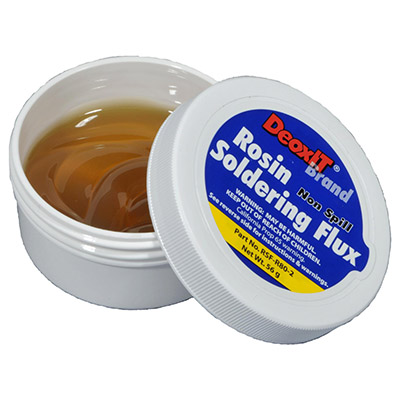
🧴 Flux

Flux helps solder flow smoothly and stick properly to metal surfaces.

  • Often included inside solder wire
  • Extra flux is very helpful for beginners and small pads
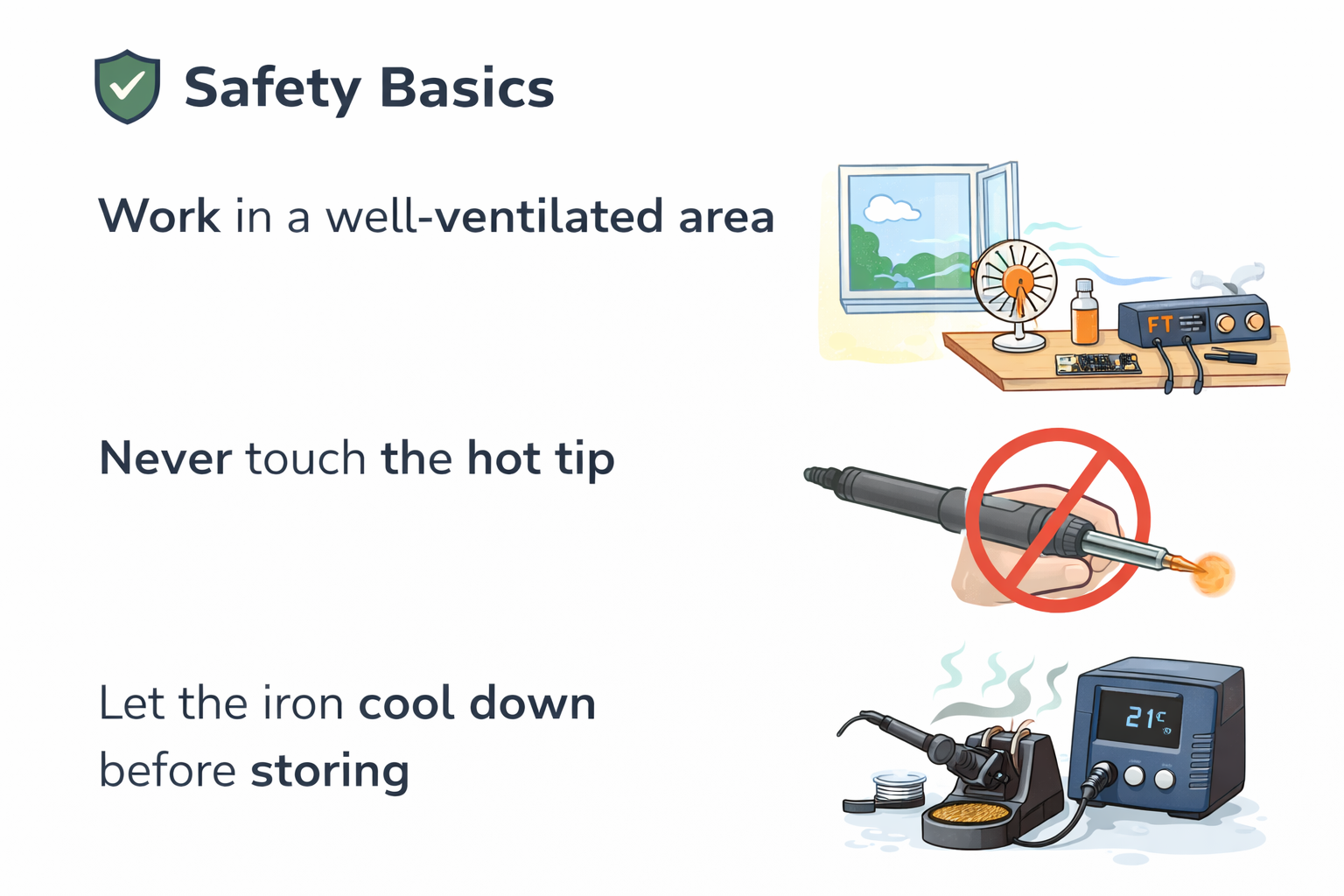
guide for soldering safety basics
Decorative svg added to top

Basic Soldering Technique

  1. Heat up the soldering iron (around 330°C for most electronics)
  2. Clean the tip on a sponge or brass wool
  3. Place the component into the board
  4. Heat the joint (touch both the pad and the component leg)
  5. Apply solder to the joint (not the tip)
  6. Remove solder first, then the iron
  7. Let the joint cool naturally

A good solder joint looks smooth, shiny, and cone‑shaped.

Video Tutorials

▶️ Quick Introduction (Perfect for First-Time Soldering)

▶️ Detailed Beginner Guide (Stronger Foundations)

This longer tutorial goes more in depth, explains common mistakes, and shows real examples. Great if you want to feel confident and avoid frustration.

Soldering our FT & FT2 chips

Practice Makes Progress

Before soldering your final project:

  • Practice on scrap wires or old circuit boards
  • Try desoldering and re‑soldering joints
  • Take your time—there’s no rush

Soldering is a skill you build with repetition, not speed.

You’ve Got This 🔥

Learning how to solder electronics is a big step toward creative independence. With a few tools, a bit of patience, and the tutorials above, you’ll be building, repairing, and experimenting in no time.

If you ever get stuck, remember: every clean solder joint started with a messy one.

Happy soldering, The Lighttoys Team

DISCOVER MORE INTERESTING TOPICS

What’s Spinning / Flow arts?

Spinning is performing art. It is community and way of life. It is mixture of flow arts when artists spins poi, staff, buugeng, fans, hula hoops,... Spinning/Flow is fun!
Read More

What is Poi? Staff? Buugeng? Hoop?

Meet the most favorite flow props! Let us help you with a simple introduction of the most known flow disciplines. Equipment for spinning, juggling, dancing...
Read More

What is Pixel Poi? And how to choose one?

Pixel Poi is a type of programmable LED poi that can display images when you spin it, creating a visually striking spectacle. Let us introduce you to the Pixel Poi effect!
Read More
pyroterra lighttoys lightpainting visual poi

How to Photo & Video LED Light props

Learn how to create great videos and pictures with LED Glow props! Learn how to capture nice light trails of your led poi, hoops, fans, staff and more! How to setup the camera.
Read More
how to take care of batteries and electronics

Taking care of the batteries and electronics

Maintenance of your LED products and its batteries is an important subject. If you want to ensure your electronic props last for a long time, you should learn how to take care of them.
Read More

How to Solder Electronics

How to get on a plane with your LED equipment without worry? Learn how to avoid troubles with transporting your precious spinning and juggling equipment.
Read More

DISCOVER MORE INTERESTING TOPICS

What’s Spinning / Flow arts?

Spinning is performing art. It is community and way of life. It is mixture of flow arts when artists spins poi, staff, buugeng, fans, hula hoops,... Spinning/Flow is fun!
Read More

What is Poi? Staff? Buugeng? Hoop?

Meet the most favorite flow props! Let us help you with a simple introduction of the most known flow disciplines. Equipment for spinning, juggling, dancing...
Read More

What is Pixel Poi? And how to choose one?

Pixel Poi is a type of programmable LED poi that can display images when you spin it, creating a visually striking spectacle. Let us introduce you to the Pixel Poi effect!
Read More
pyroterra lighttoys lightpainting visual poi

How to Photo & Video LED Light props

Learn how to create great videos and pictures with LED Glow props! Learn how to capture nice light trails of your led poi, hoops, fans, staff and more! How to setup the camera.
Read More
how to take care of batteries and electronics

Taking care of the batteries and electronics

Maintenance of your LED products and its batteries is an important subject. If you want to ensure your electronic props last for a long time, you should learn how to take care of them.
Read More

How to Solder Electronics

How to get on a plane with your LED equipment without worry? Learn how to avoid troubles with transporting your precious spinning and juggling equipment.
Read More